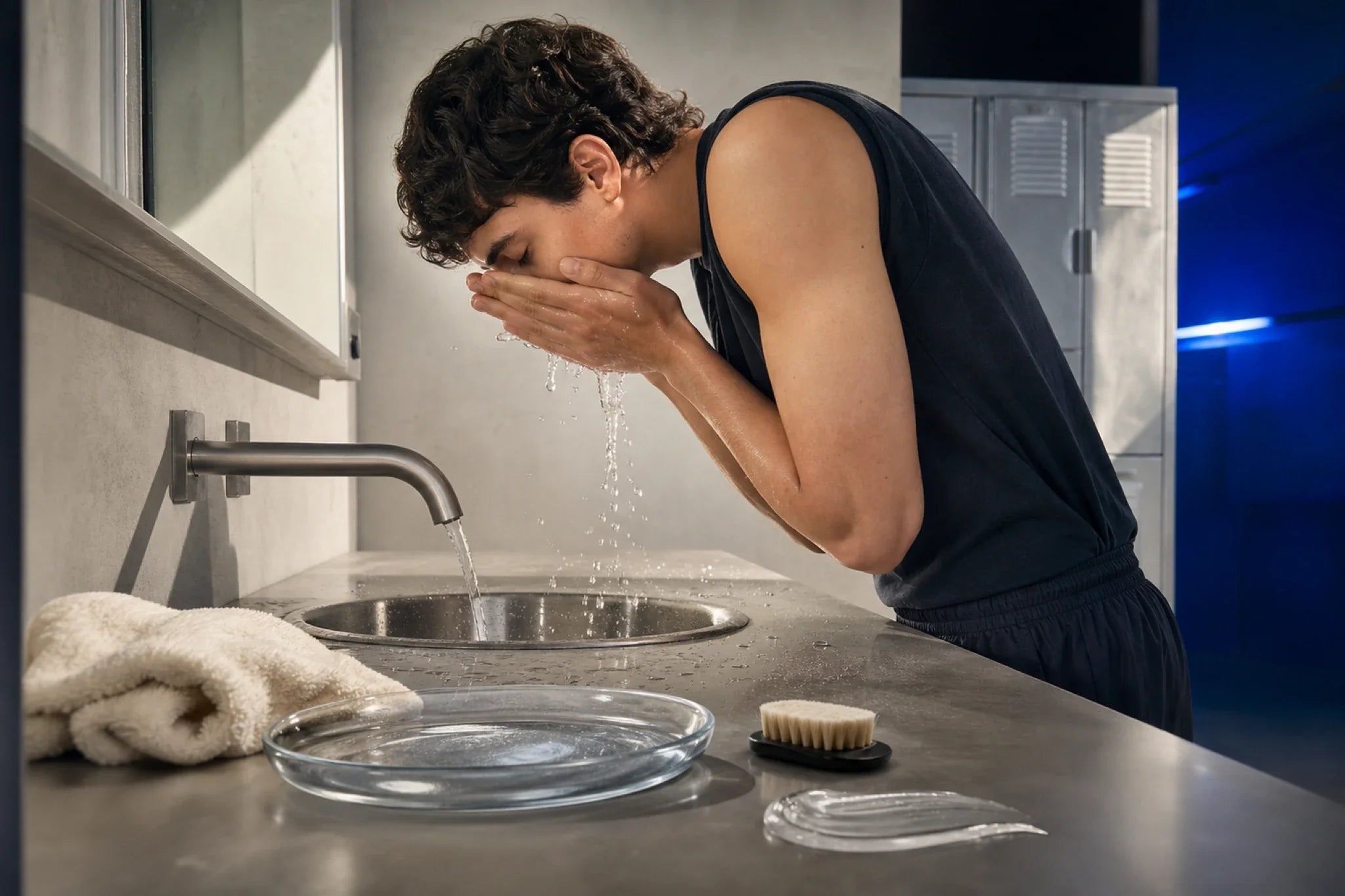
Dandruff on your shoulders is a laundry problem before it's a scalp problem — the flakes you see on a dark shirt collar are days of buildup finally shaking loose. Fix the routine that sheds it in the shower, not the shirt you're wearing.
- How to fix dandruff on shoulders starts at the scalp: buildup sheds as flakes, not more product on top.
- Wet hair against fabric spreads flakes further — dry fully before you dress, every single day.
- A twice-weekly scalp routine with a proper shampoo clears visible buildup within about two weeks.
- Persistent redness or itching past flaking is a dermatologist question, not a stronger-shampoo question.
Why This Matters
Scalp skin turns over constantly, and the top layer sheds in small clumps that are supposed to be invisible. When oil, product residue, or a dry scalp speed that shedding up, the clumps get bigger and lighter-colored — and they land on your shoulders the second you move your head. That's the whole mechanism. It's not dirt, and it's not about how often you shower your body. It's what's happening one layer up, on your scalp, that you can't see in a mirror.
The fix isn't a miracle formula. It's sequencing: what you wash with, how often, and how dry your hair is before it touches fabric. Get that sequence right and the flakes stop showing up on collars before you even notice them building.
What You'll Need
- A shampoo built for scalp buildup, not just hair texture — the Keratin Volume Boost Shampoo works as a daily option if your current one is leaving residue
- A body-and-scalp wash for gym days when a full hair wash isn't practical — the 2-in-1 Hair & Body Wash for Men covers both in one step
- A soft-bristle scalp brush or your fingertips — no metal combs against the scalp
- A microfiber towel or low-heat dryer setting
- 10 minutes, twice a week, minimum
None of this requires a diagnosis. Most shoulder flaking in 2026 is buildup and drying habits, not a chronic scalp condition — treat it that way first and see what changes in a week.
The Steps
1. Rule out buildup before you blame your scalp
Run a finger along your scalp the morning after a wash. If it feels waxy or you see white flakes clump rather than sit loose and dry, that's product or oil buildup, not dry skin. Buildup responds to washing frequency. Dry-skin flaking responds to less washing and more moisture. Confusing the two is why most men's routines backfire — they add product to a scalp that already has too much on it.
2. Wash on a schedule, not by feel
Washing every day strips natural oil and can trigger more flaking as the scalp overcorrects. Skipping washes for a week lets buildup accumulate and shows up on shoulders by day four or five. The middle ground that works for most routines: every 48 hours. Consistency matters more than the exact product — pick a cadence and hold it for three weeks before judging results.
3. Massage the scalp for a full 60 seconds
Shampoo sitting on top of hair does almost nothing for the scalp underneath it. Work the lather into the scalp itself with fingertips — not nails — for a full 60 seconds before rinsing. This is where buildup actually lifts. Most men rinse at 15 seconds because that's how long it takes to feel clean, not how long it takes to work.
4. Rinse until the water runs completely clear
Residual shampoo or conditioner left on the scalp is one of the most common causes of shoulder flaking that nobody suspects — it dries, flakes, and looks identical to dandruff. Rinse for a full extra 30 seconds past the point where it feels done. If your water runs even slightly cloudy when you tip your head back, keep going.
5. Dry hair fully before you get dressed
Damp scalp skin sheds more easily against fabric friction than dry skin does — wet flakes stick to collars and stay stuck through a whole shift. Towel-dry to the point of no dripping, then either air-dry for 15 minutes before dressing or use a dryer on low heat. Skipping this step undoes steps 1 through 4 entirely.
6. Separate your hair routine from your beard and body routine
Using the same bar of soap on scalp, face, and body concentrates oil and residue in one place instead of clearing it. If you're already using a facial cleanser like the Radiant Glow Face Wash — wait, keep that one for your face only. Scalp gets its own product. This is a common shortcut that looks efficient and quietly makes shoulder flaking worse.
7. Brush out loose flakes before they migrate
A soft scalp brush used dry, once daily for 20 seconds, physically removes the flakes that are already loose before they fall on their own schedule — usually onto a shirt at your desk. This isn't a cure step. It's a control step, and it's the one most routines skip entirely.
8. Know when it's past a routine fix
If flaking comes with visible redness, persistent itching, or patches that look inflamed rather than just dry, that's outside what a shampoo swap resolves. A dermatologist can identify what's actually happening on the scalp in a way no product claim should try to. This routine helps with buildup-driven flaking. It won't resolve an underlying scalp condition, and no shampoo honestly will.


Troubleshooting
- Flakes are back within a day of washing. You're likely rinsing too fast (step 4) or the scalp is overcorrecting from washing too often. Stretch the interval to a full 48 hours and rinse an extra 30 seconds.
- White residue on the shirt collar even right after a shower. Check hair dryness before dressing — this is almost always step 5, not the shampoo itself.
- Scalp feels oily by midday and flaking gets worse. An oily scalp sheds more visibly because loose skin cells stick to excess sebum instead of falling away clean; pairing the right wash cadence with something built for oil control matters as much as the product itself, which is the same logic behind most shampoos for oily scalp recommendations.
- Flaking is worse on your beard line, not just your scalp. That's a separate routine — a facial cleanser matched to beard skin, not your scalp shampoo, handles that area.
- It's worse in winter. Indoor heating dries scalp skin further. Cut wash frequency slightly and make sure the scalp isn't sitting damp under a hat for hours.
- You've done all six weeks and nothing's changed. That's your signal to see a dermatologist rather than rotate through more shampoos. Routine fixes buildup-driven flaking. It doesn't fix everything that looks like it.
Tools And Resources
- A gym-morning routine built around this exact sequencing if you're washing scalp and body back to back before work
- The 2-in-1 Hair & Body Wash for a single-step gym-day option
- A soft scalp brush, kept separate from any brush used on the face
- A low-heat dryer setting or 15 minutes of patience before you get dressed
“Flakes on a dark shirt aren't a hygiene failure. They're skin cells shedding faster than you're clearing them, and clearing them is a schedule, not a scrub.”
What To Do Next
Once shoulder flaking is under control, the next thing worth checking is whether your face routine is doing the same job it should — a simple skincare routine built for men who hate fuss covers the same buildup-and-consistency logic applied to skin instead of scalp. Read the ingredient list on whatever you switch to next. That's the whole OLIRS position: check the label, don't take a claim on faith.
FAQ
How do I fix dandruff on my shoulders fast?
Wash on a 48-hour cycle, massage the scalp for a full 60 seconds, rinse an extra 30 seconds, and dry hair completely before dressing. Most buildup-driven flaking visibly improves within two to three weeks of consistent washing.
Is dandruff on shoulders the same as dandruff on the scalp?
It's the same flaking, just visible somewhere else. Shoulder flakes are scalp flakes that have already fallen and stuck to fabric, usually because hair was damp when you got dressed.
Should I wash my hair every day if I have dandruff?
No. Daily washing can strip oil and trigger the scalp to overcorrect with more oil and more visible flaking. Every 48 hours is a more reliable starting cadence for most routines.
Does a dandruff shampoo work better than a regular one?
A shampoo built to clear buildup, used with proper scalp massage time and full rinsing, matters more than any single label claim. Technique fixes more shoulder flaking than product swaps alone.
Why does dandruff get worse in winter?
Indoor heating and hats trap dry, damp air against the scalp, which speeds up flaking. Cutting wash frequency slightly and letting hair air out under a hat helps.
When should I see a dermatologist about dandruff?
If flaking comes with redness, persistent itching, or inflamed patches after several weeks of a consistent routine, a dermatologist can identify what a shampoo swap can't fix on its own.
Can body wash double as a scalp wash?
A 2-in-1 hair and body wash works fine for gym days when a full routine isn't practical, but it shouldn't replace a dedicated scalp shampoo on your main wash days.
Does brushing help with dandruff?
A soft scalp brush used dry for 20 seconds removes flakes that are already loose before they fall on their own, which reduces what ends up on a collar during the day.
One Last Thing
The detail almost nobody checks: the rinse. Most shoulder flaking that survives a shampoo swap in 2026 is leftover product drying on the scalp, not new buildup — rinse for a full 30 seconds past the point where it feels done, every time, and watch how much less ends up on your collar by week two.